Finitude 2011 (v1), 2012 (v2 & 3)
An interactive installation with embodied interface, digital projection, multi-touch sensitive screen surfaces, interactive 3D gaming software, motorised dioramas, 4 channel spatial sound & new furniture forms - investigating the cultural dimensions of sustainability through the lens of 'time'.
SHOWINGS:
V3: Solo Showing, Screen Space Gallery, Ground Floor, 30 Guildford Lane, Melbourne VIC 3000 Australia Oct 4 - 27, 2013. (open 12-6pm Thursday – Saturday). Essay by Paul Carter. View Catalogue.
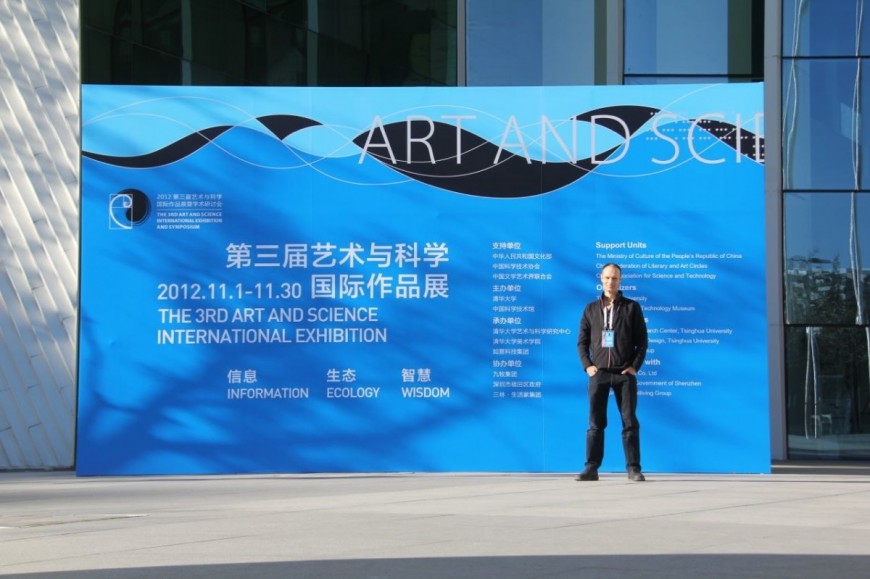
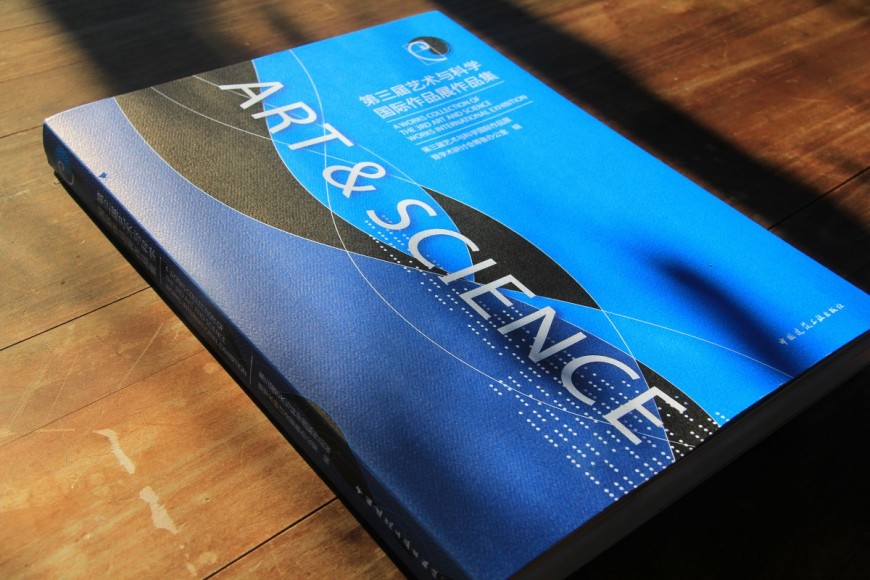
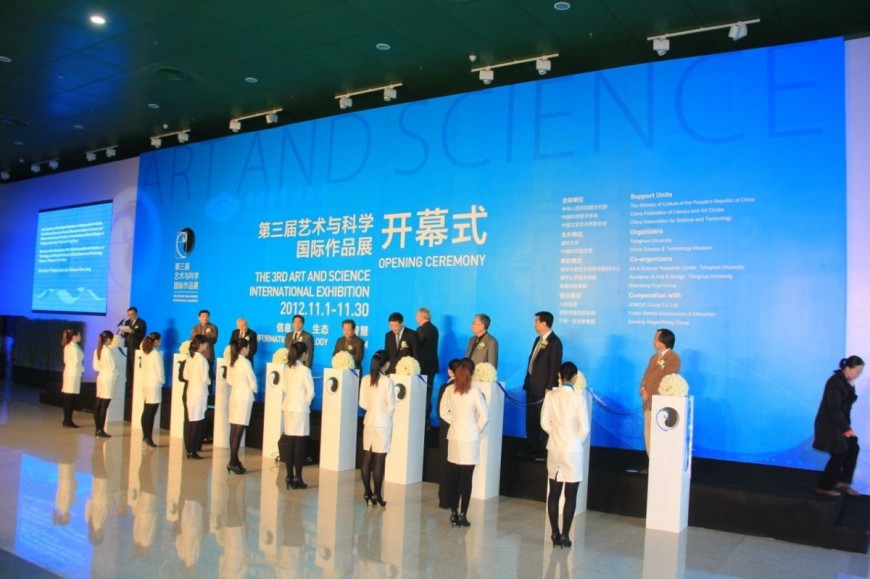
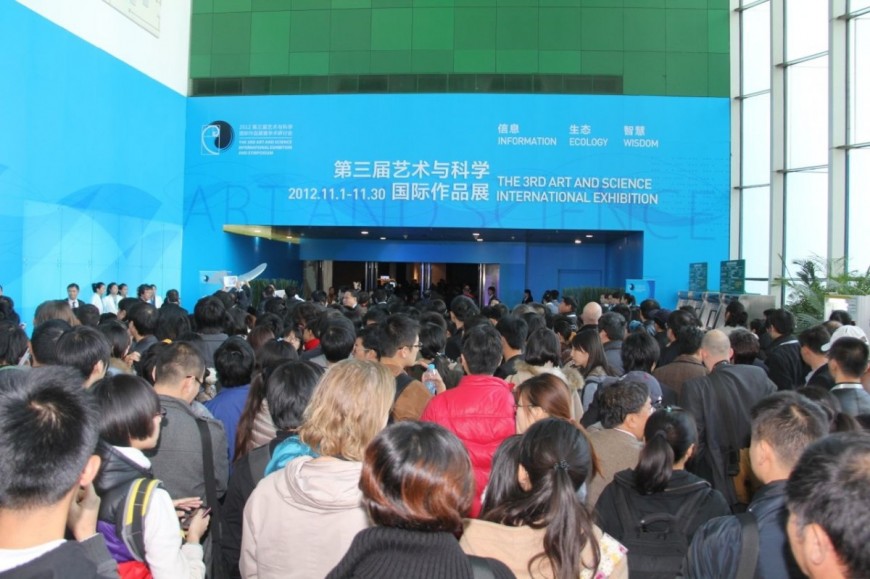
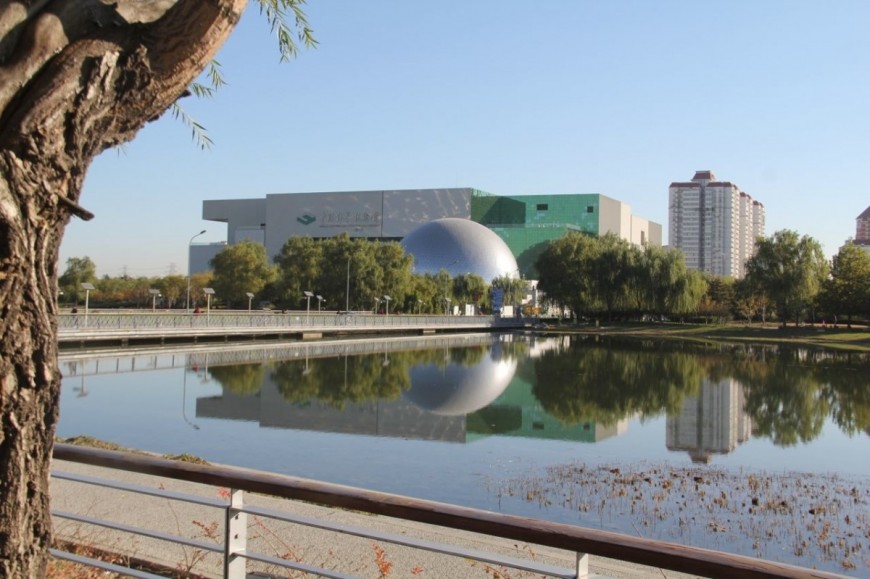
V3: "Information, Ecology & Wisdom', 3rd Art and Science International Exhibition and Symposium, National Science Museum, Beijing, China, November 2012.
V2: Gallery Artisan, 381 Brunswick St, Fortitude Valley, Brisbane, Australia. 12th April - June 9th 2012. Curated by Kirsten Fitzpatrick.
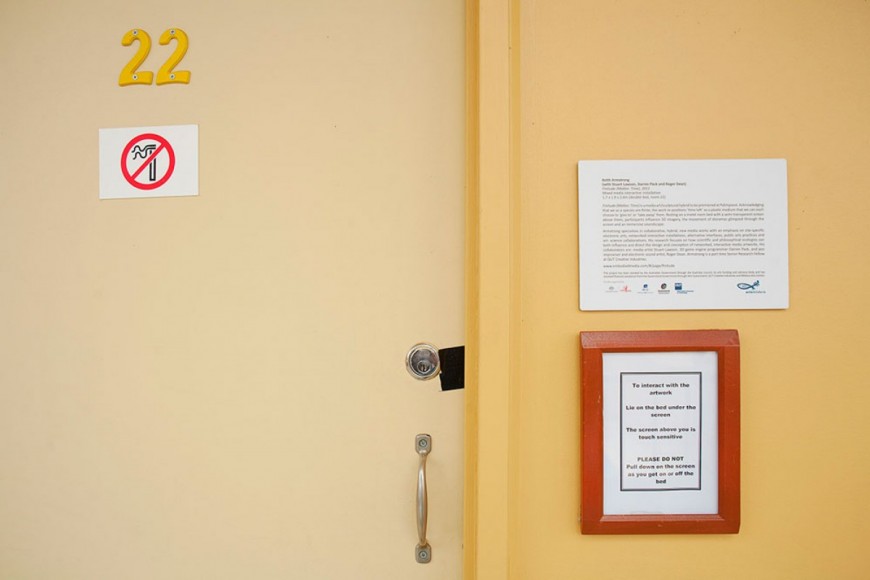
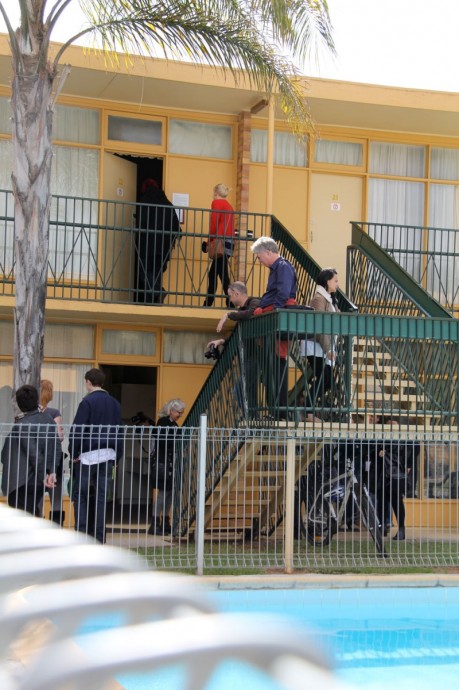
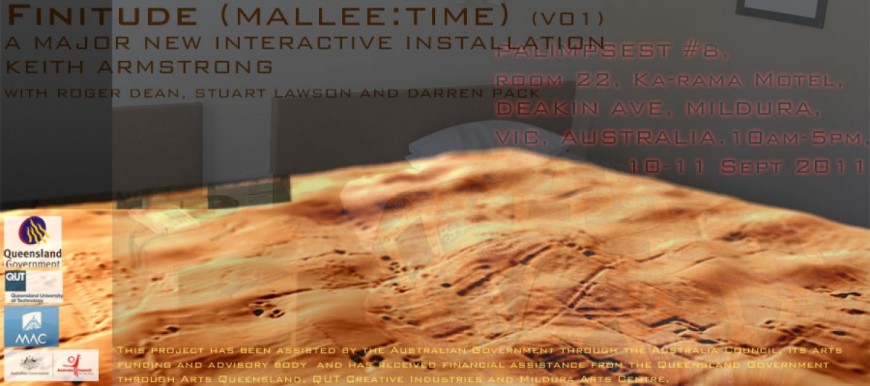
V1: Mildura Palimpsest #8, 9-11th September, 2011, Room 22, Ka-rama Motel, Deakin Avenue, Mildura, VIC, Australia. Curated by Kristian Haggblom and Helen Vivian.
TEAM: Keith Armstrong (Artistic director), Roger Dean (Composition), Stuart Lawson (3D Designer), Darren Pack (3D Programming) and consultants Dr. Tony Fry (Professor of Design Futures) Dr. Liz Baker (DPI, Australia).
PARTNERS: Australia Council For The Arts, QUT Creative Industries, Arts Queensland, Mildura Arts Centre, Mildura Palimpsest 2011, James Cook University, MAAP Media Bank, and Artisan, The 3rd Art and Science International Exhibition, Beijing, and Symposium, Tsinghua University, Beijing.
MORE: “Time is change, time is finitude. Humans are a finite species. Every decision we make today brings that end closer, or alternatively pushes it further away. Nothing can be neutral”. Tony Fry
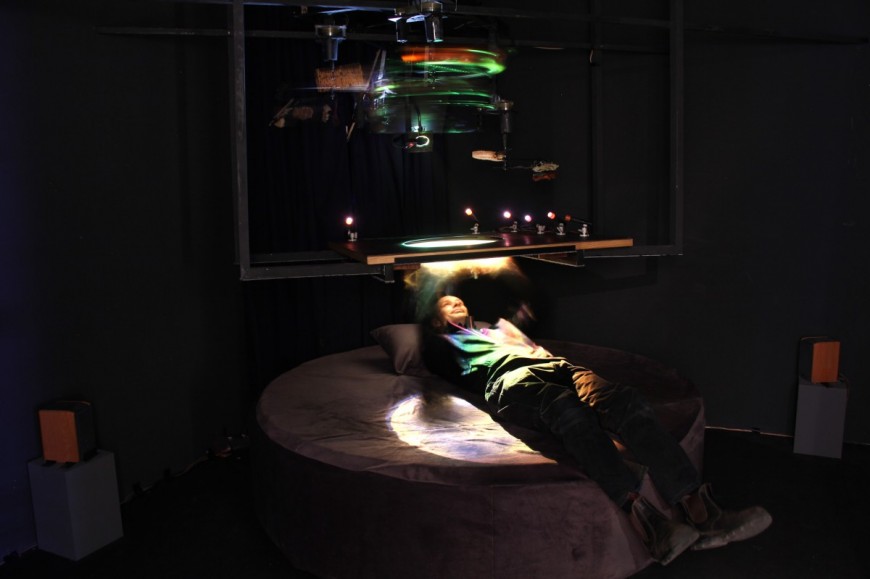
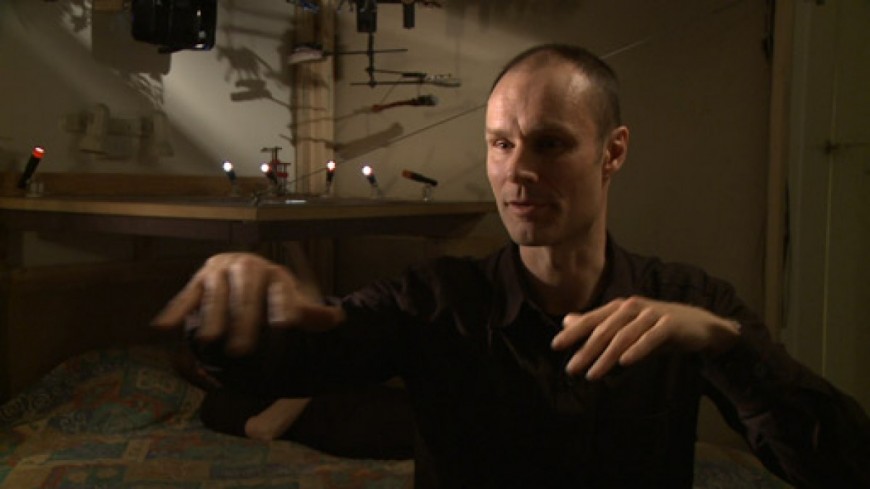
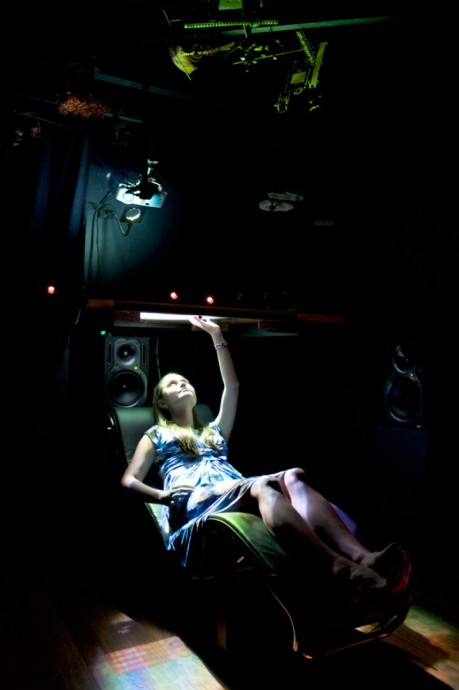
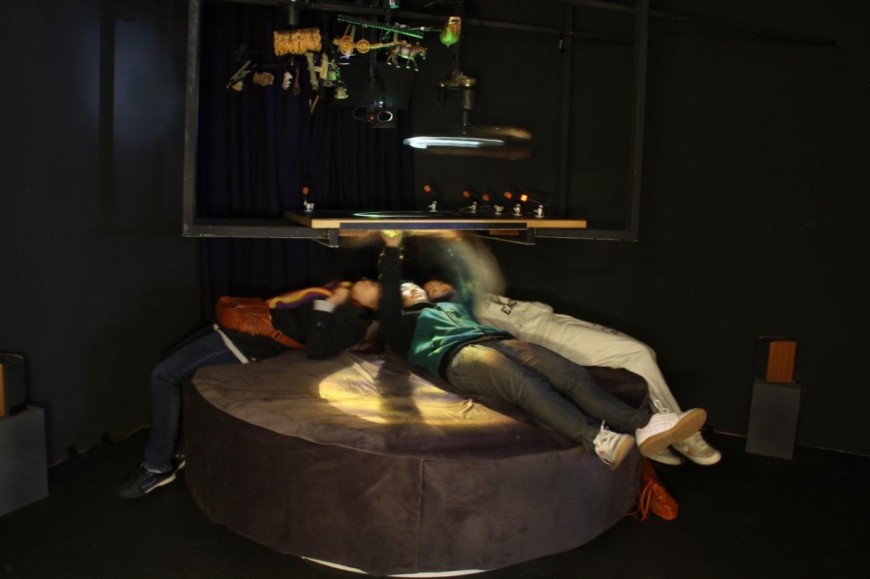
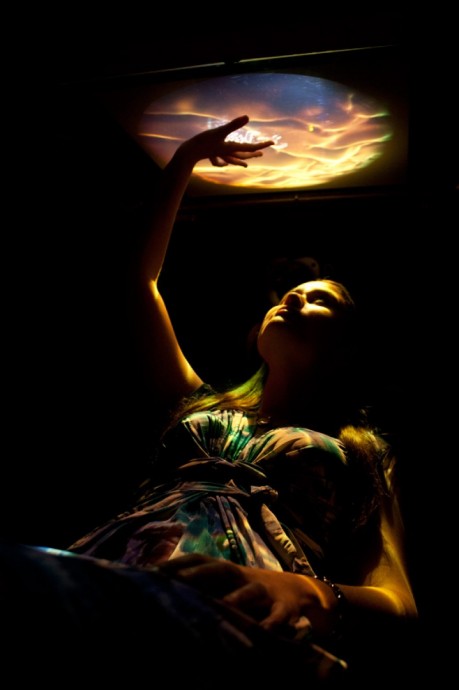
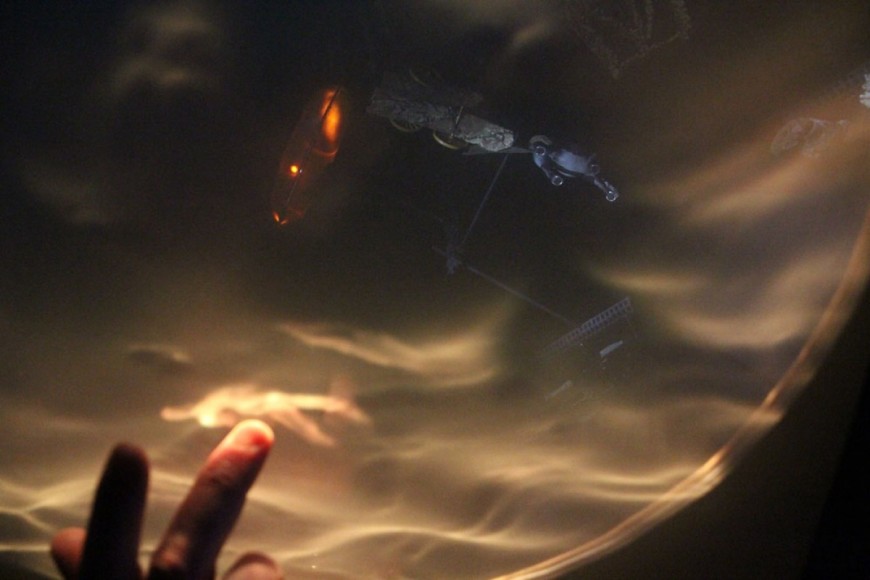
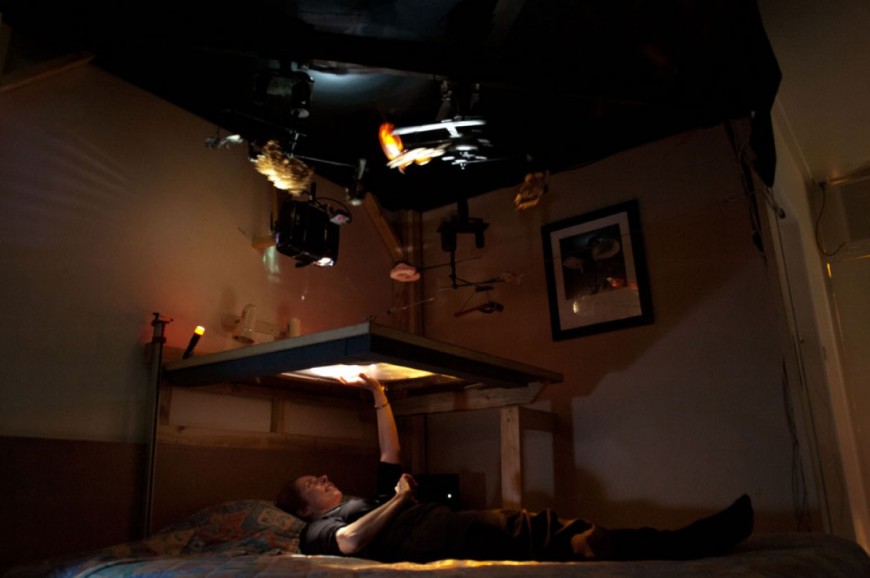
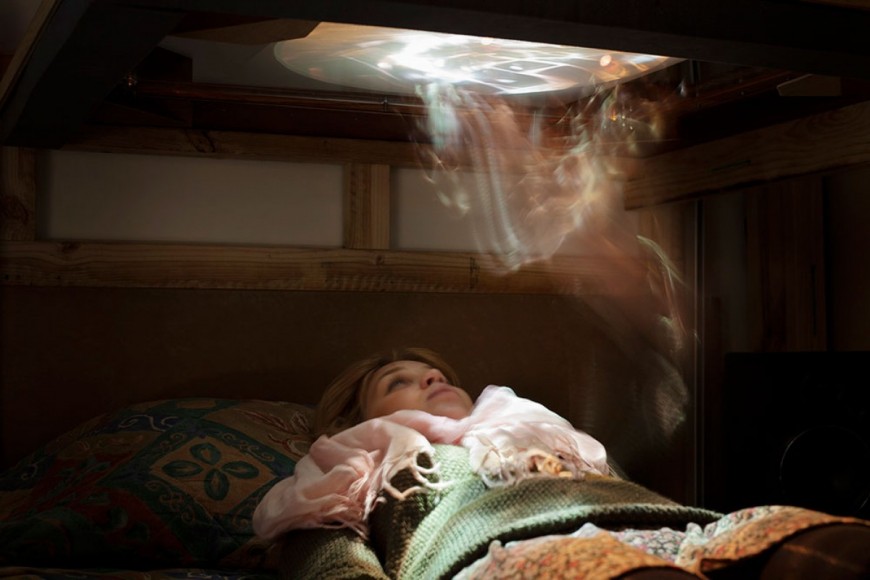
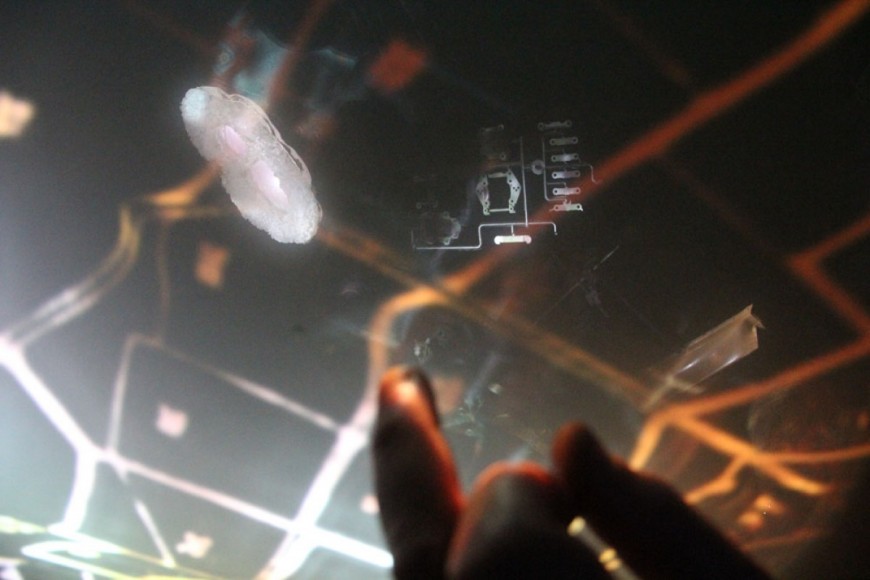
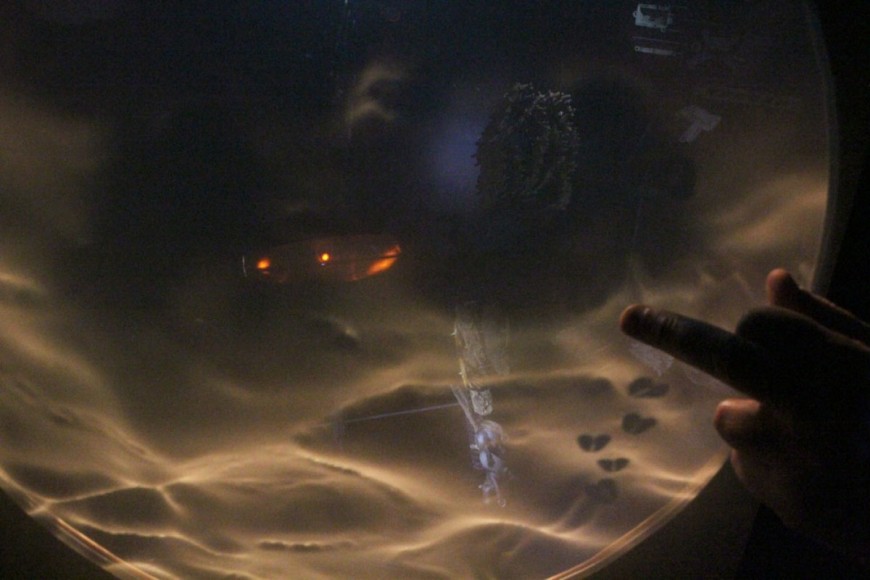
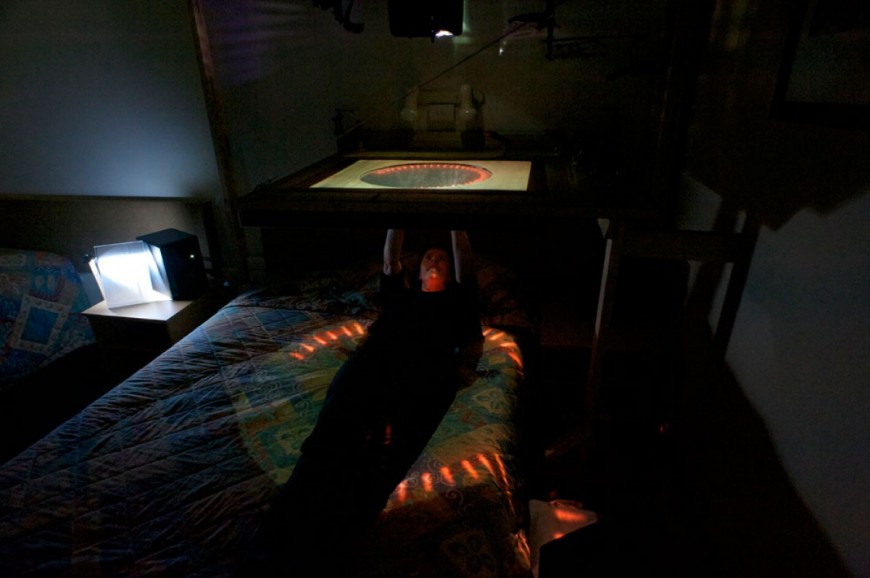
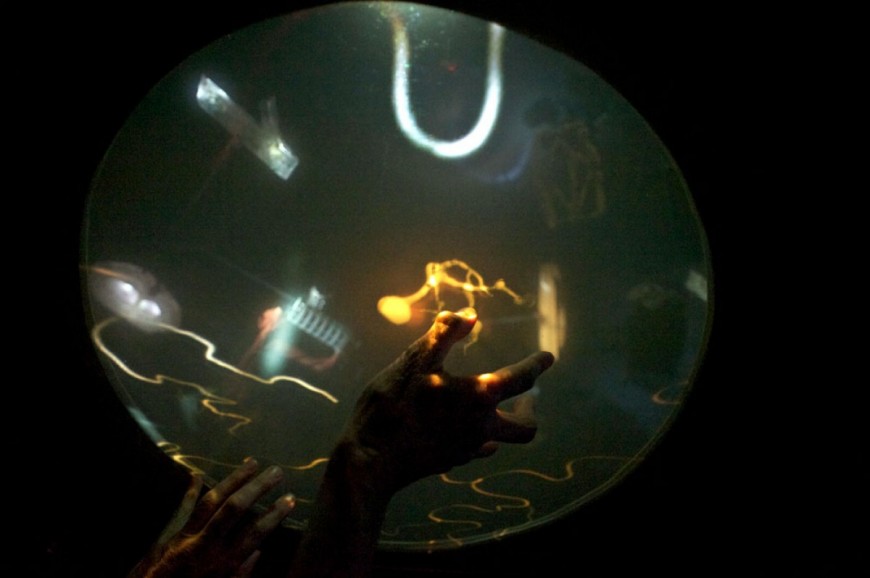
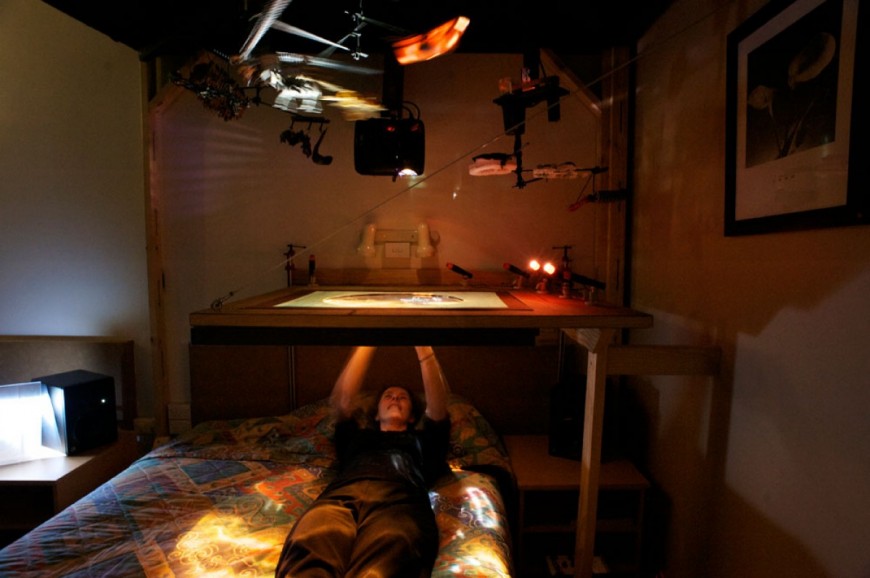
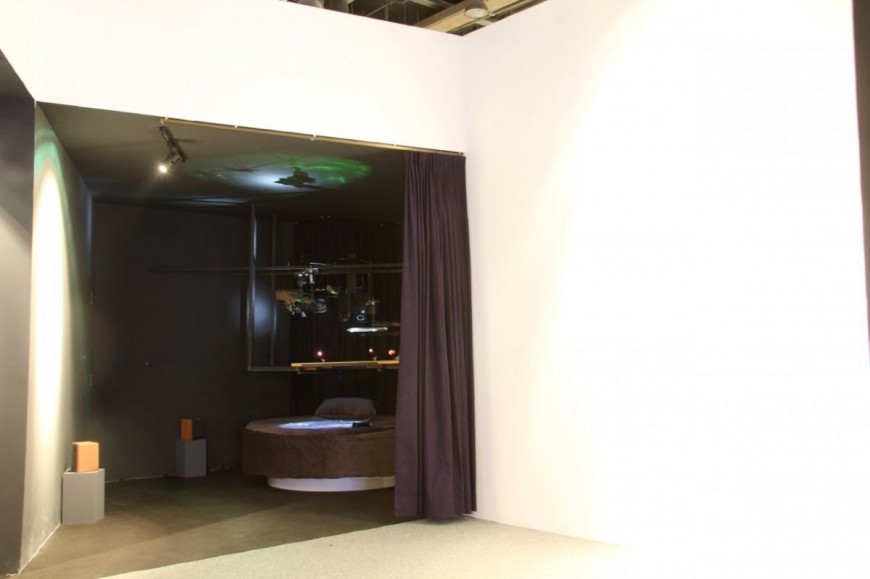
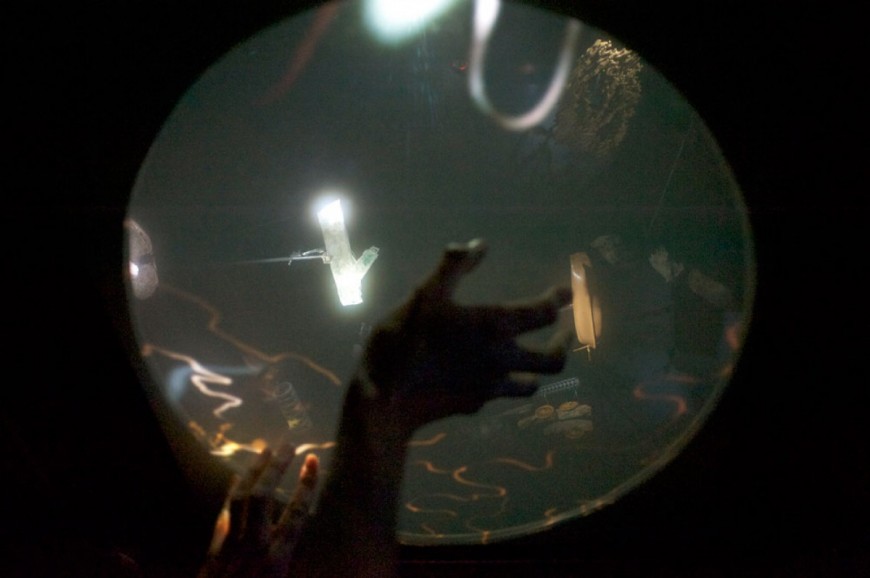
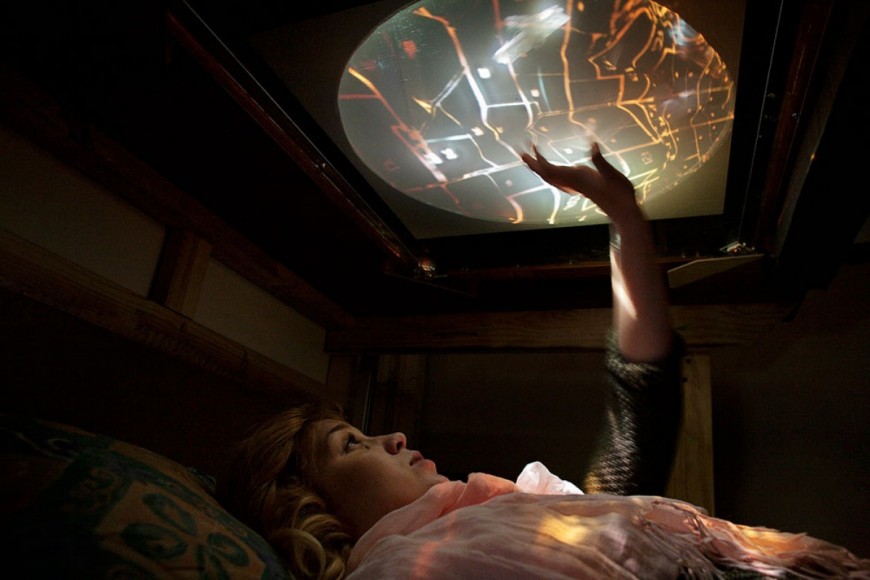
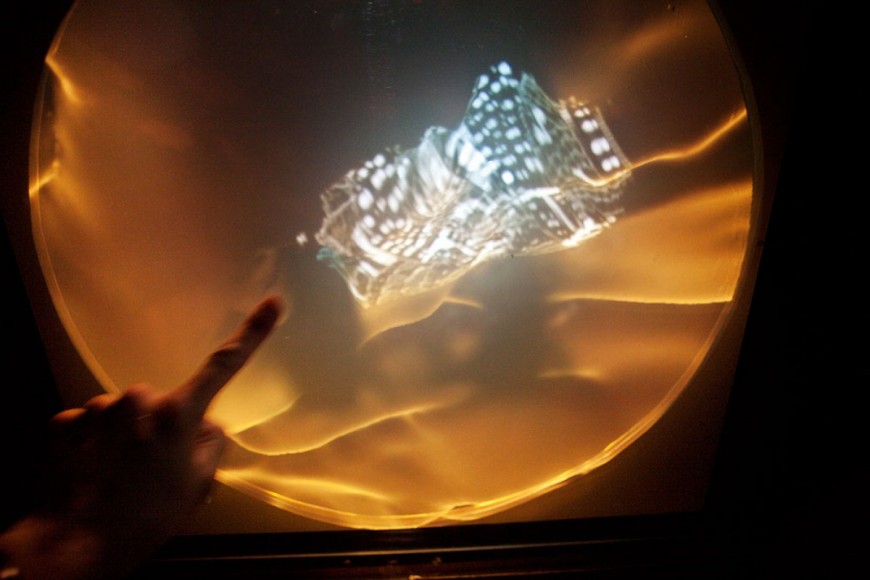
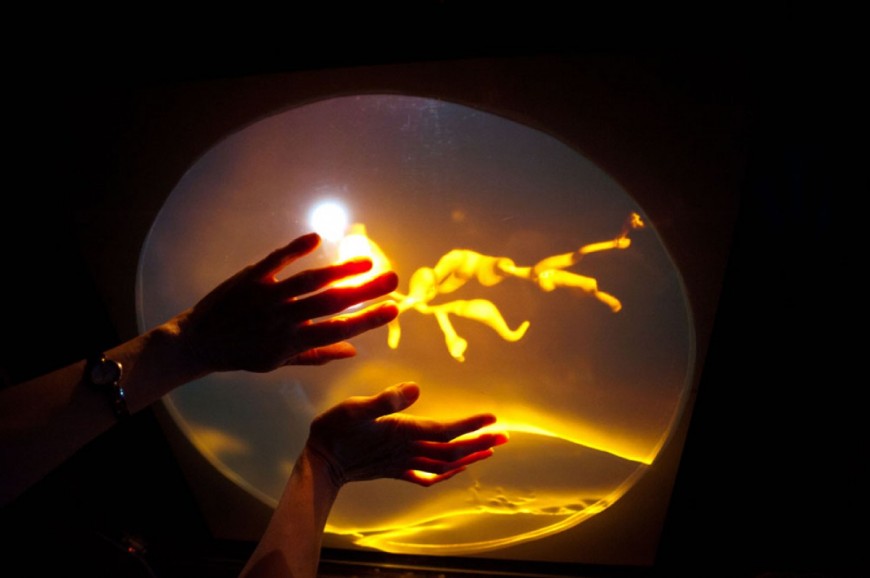
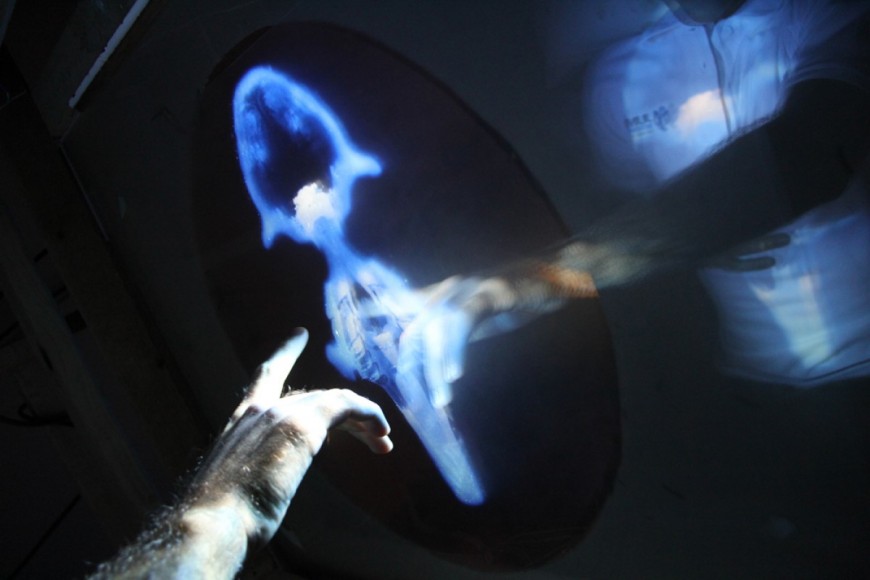
Finitude (Mallee:Time) is a major new media/sculptural hybrid work premiered in 2011 in version 1 at the Ka-rama Motel for the Mildura Palimpsest #8 ('Collaborators and Saboteurs'). Version 2 was shown at Gallery Artisan, Brisbane in May-June 2012. Each participant/viewer lies comfortably on their back. Directly above them is a semi-transparent Perspex screen that displays projected 3D imagery and is simultaneously sensitive to the lightest of finger touches. Depending upon the ever changing qualities of the projected image on this screen the participant can see through its surface to a series of physical dioramas suspended above, lit by subtle LED spotlighting. This diorama consists of a slowly rotating series of physical environments, which also include several animatronic components, allowing the realtime composition of whimsical ‘landscapes’ of both 'real' and 'virtual' media.
Through subtle, non-didactic touch-sensitive interactivity the participant then has influence over both the 3D graphic imagery, the physical movements of the diorama and the 4 channel immersive soundscape, creating an uncanny blend of physical and virtual media. Five speakers positioned around the room deliver a rich interactive soundscape that responds both audibly and physically to interactions.
VERSION 1, CONTEXT/THEORY: Finitude (Mallee: Time) is Version 1 of a series of presentations during 2012-14. This version has been inspired through a series of recent visits and residencies in the SW Victoria Mallee country. Further drawing on recent writings by post colonial author Paul Carter, the work is envisaged as an evolving ‘personal topography’ of place-discovery. By contrasting and melding readily available generalisations of the Mallee regions’ rational surfaces, climatic maps and ecological systems with what Carter calls “a fine capillary system of interconnected words, places, memories and sensations” generated through my own idiosyncratic research processes, Finitude (Mallee Time) invokes a “dark writing” of place through outside eyes - an approach that avoids concentration upon what 'everyone else knows', to instead imagine and develop a sense how things might be.
This basis in re-imagining and re-invention becomes the vehicle for the work’s more fundamental intention - as a meditative re-imagination of 'time' (and region) as finite resources: Towards this end, every object, process and idea in the work is re-thought as having its own ‘time component’ or ‘residue’ that becomes deposited into our 'collective future'. Thought this way Finitude (Mallee Time) suggests the poverty of predominant images of time as ‘mechanism’ to instead envisage time as a plastic cyclical medium that we can each choose to ‘give to’ or ‘take away from’ our future. Put another way - time has become finitude.
Finitude Catalogue, Screenspace, Melbourne 2013
Read Interview with Lisa Gye - 'Returning Time to the Future'
(Paper Version) (Online Version) in Realtime Issue #109 Jun-Julv 2012 pg. 18.
Finitude (v2), Invite, Artisan Gallery, Brisbane. (PDF)
Finitude (v2), DL Printed Invite, Artisan Gallery, Brisbane. (PDF)
Finitude (v2), Setup Diagram. (PDF)
Palimpsest #8 Exhibition Program (PDF)
Palimpsest #8 Flyer (PDF)
Local Press Cutting (PDF) (Weblink)
Setup, Technical Diagram (PDF)